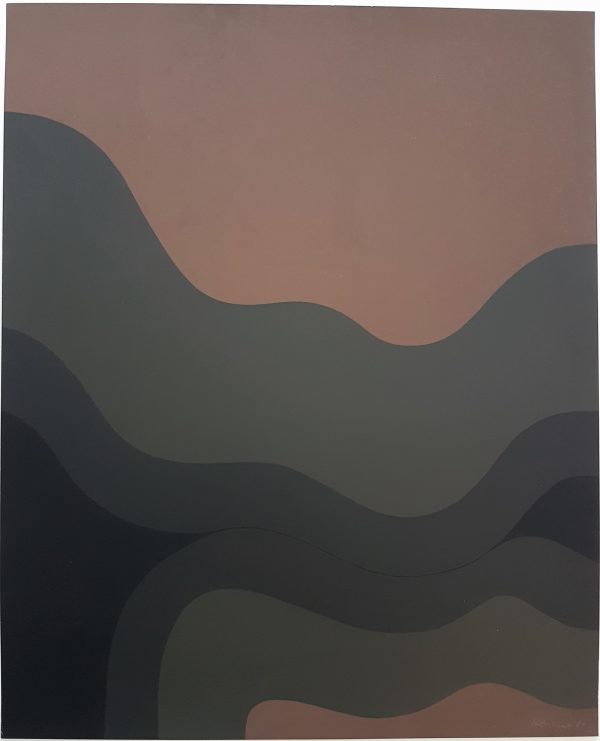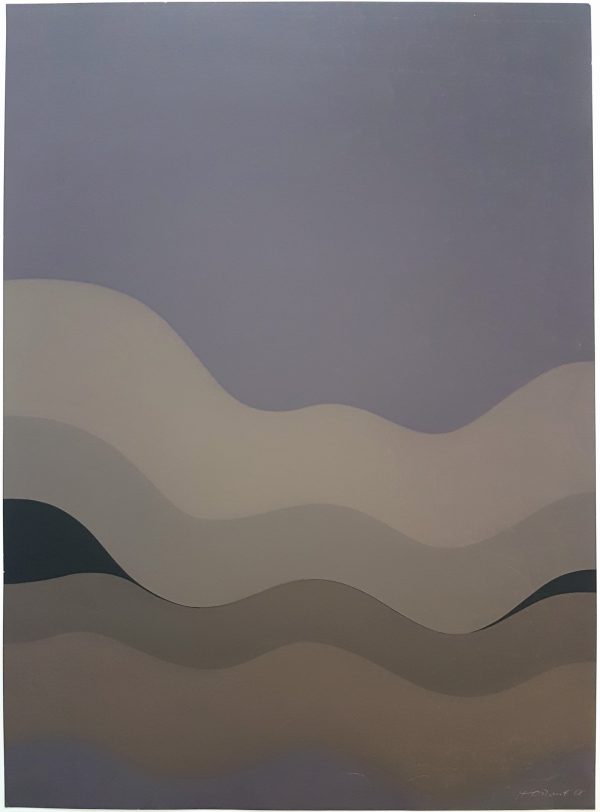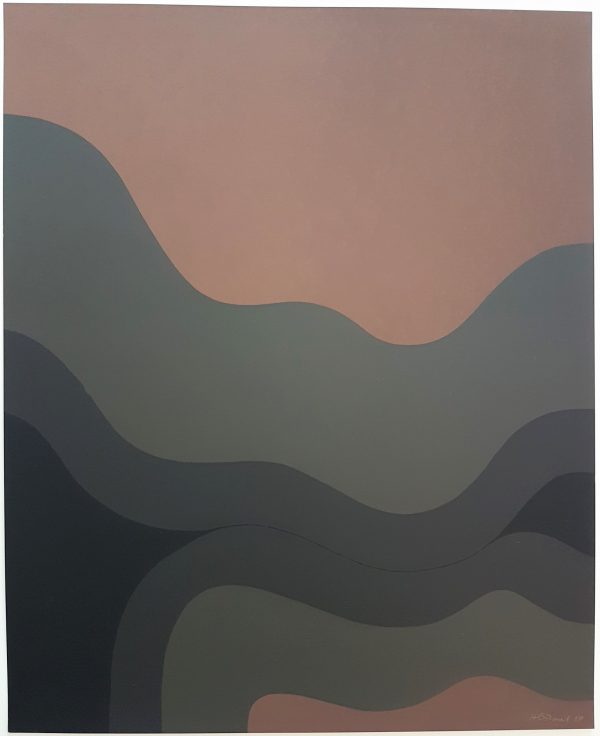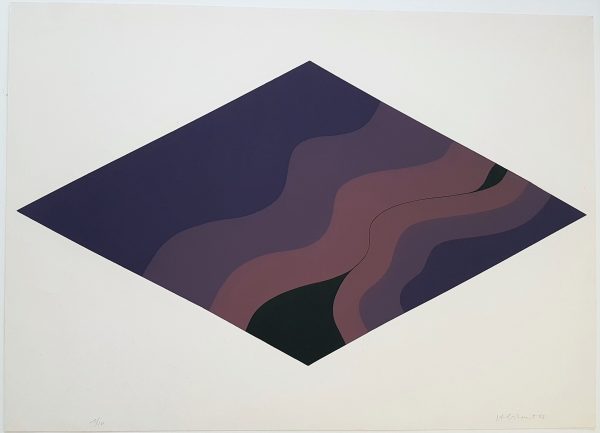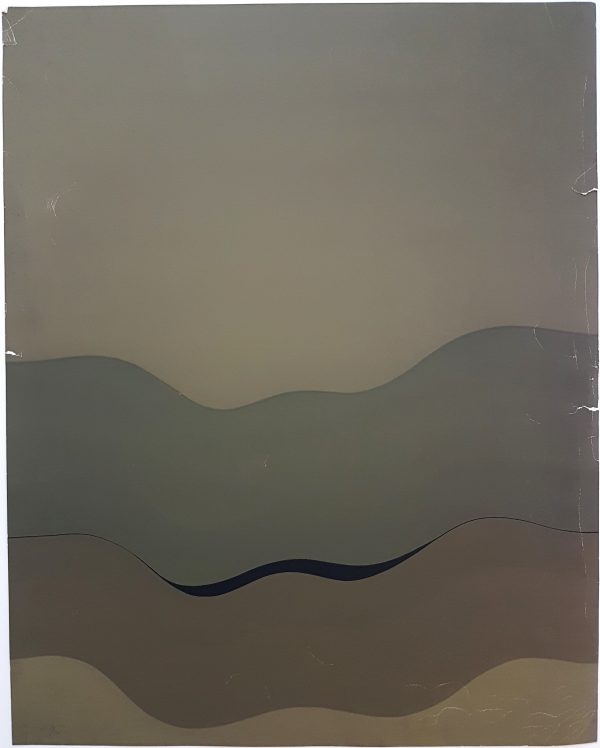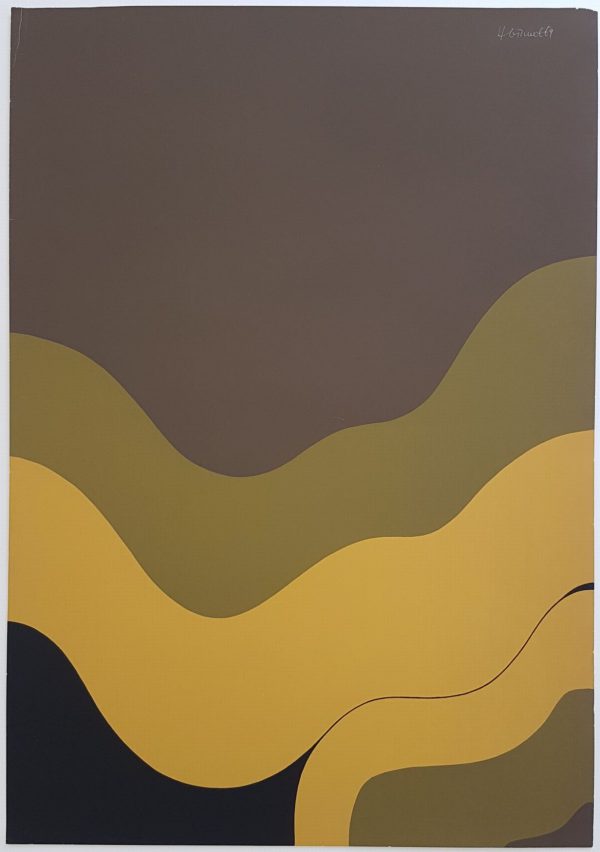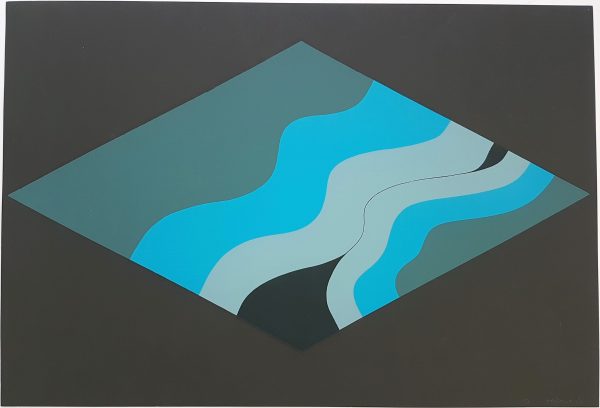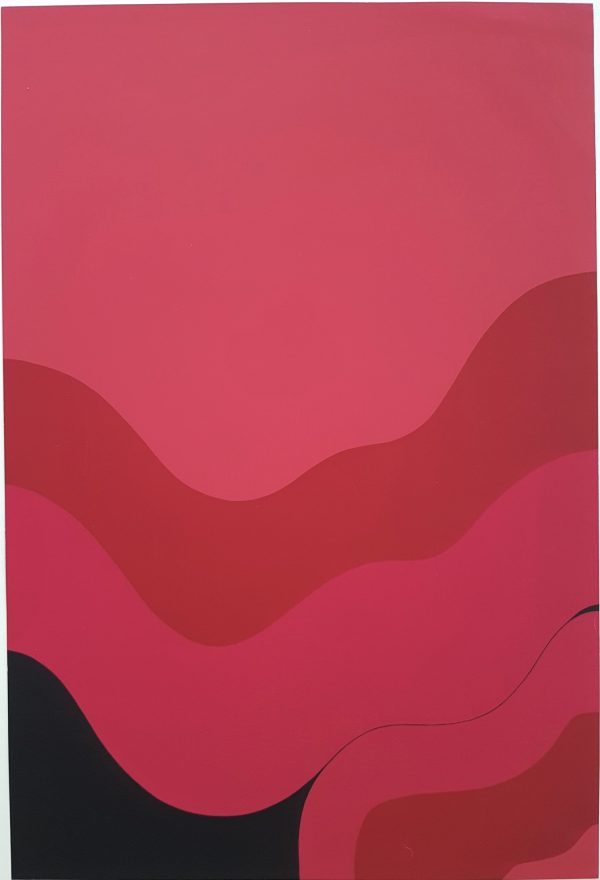

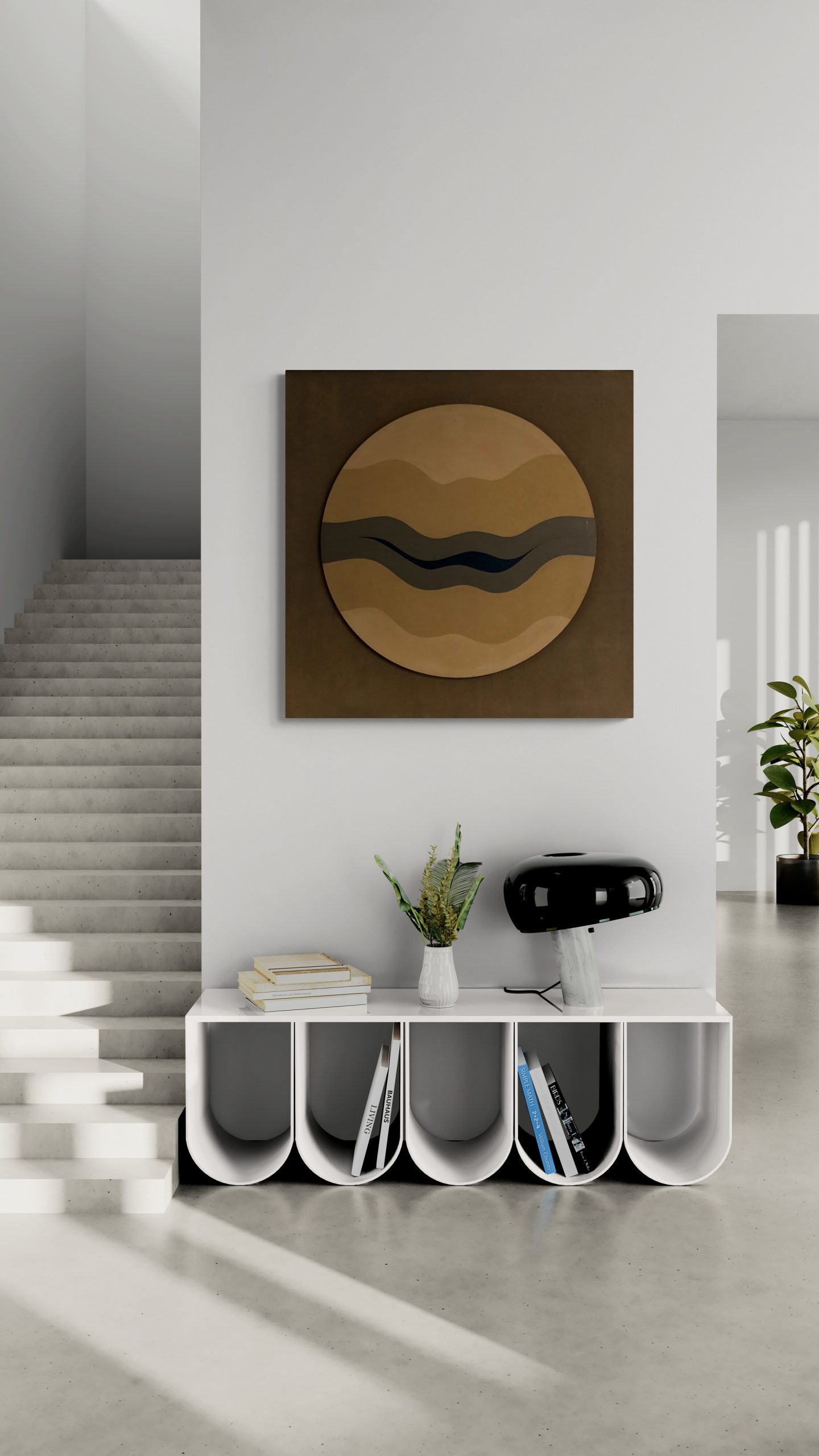
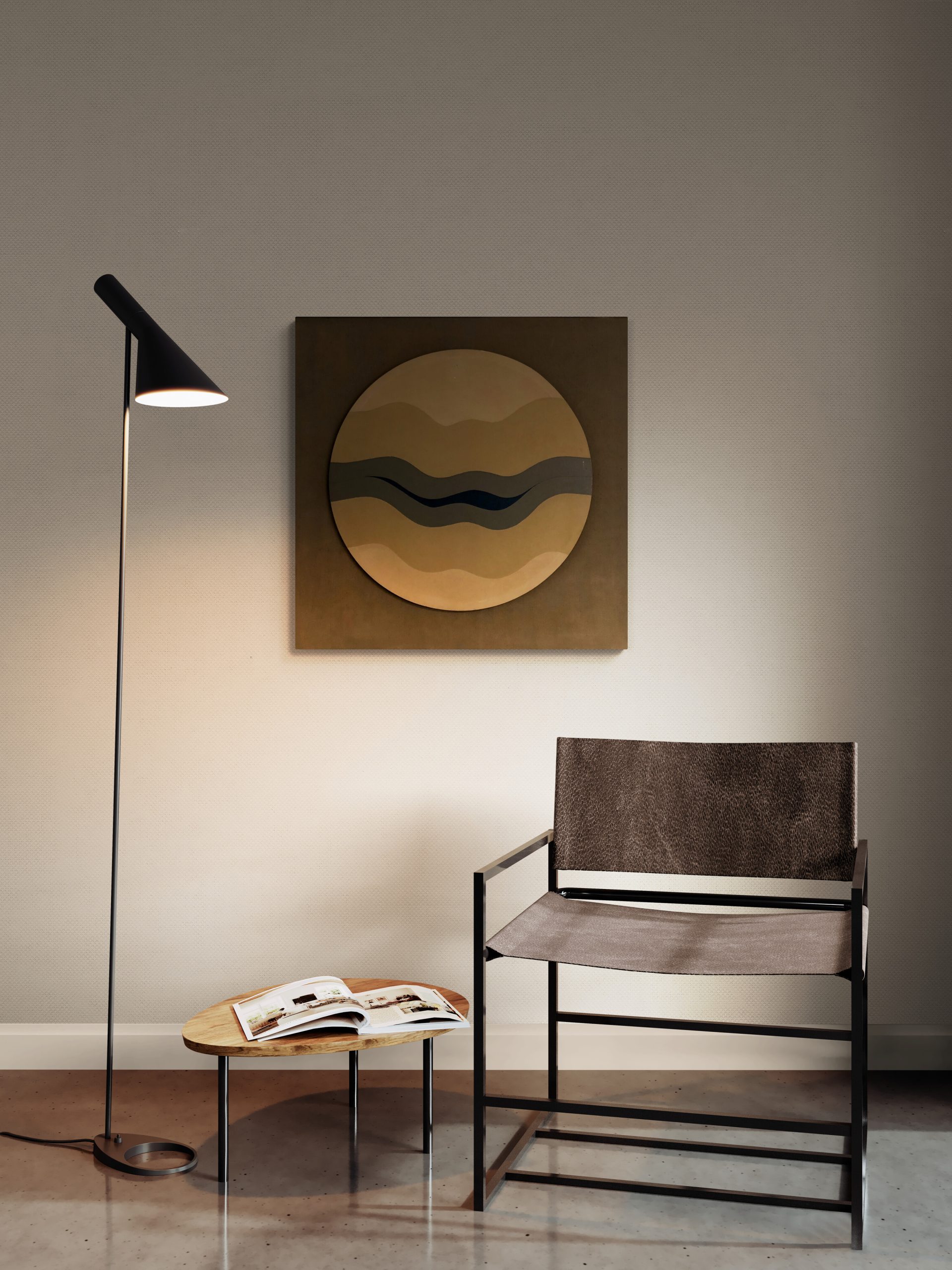
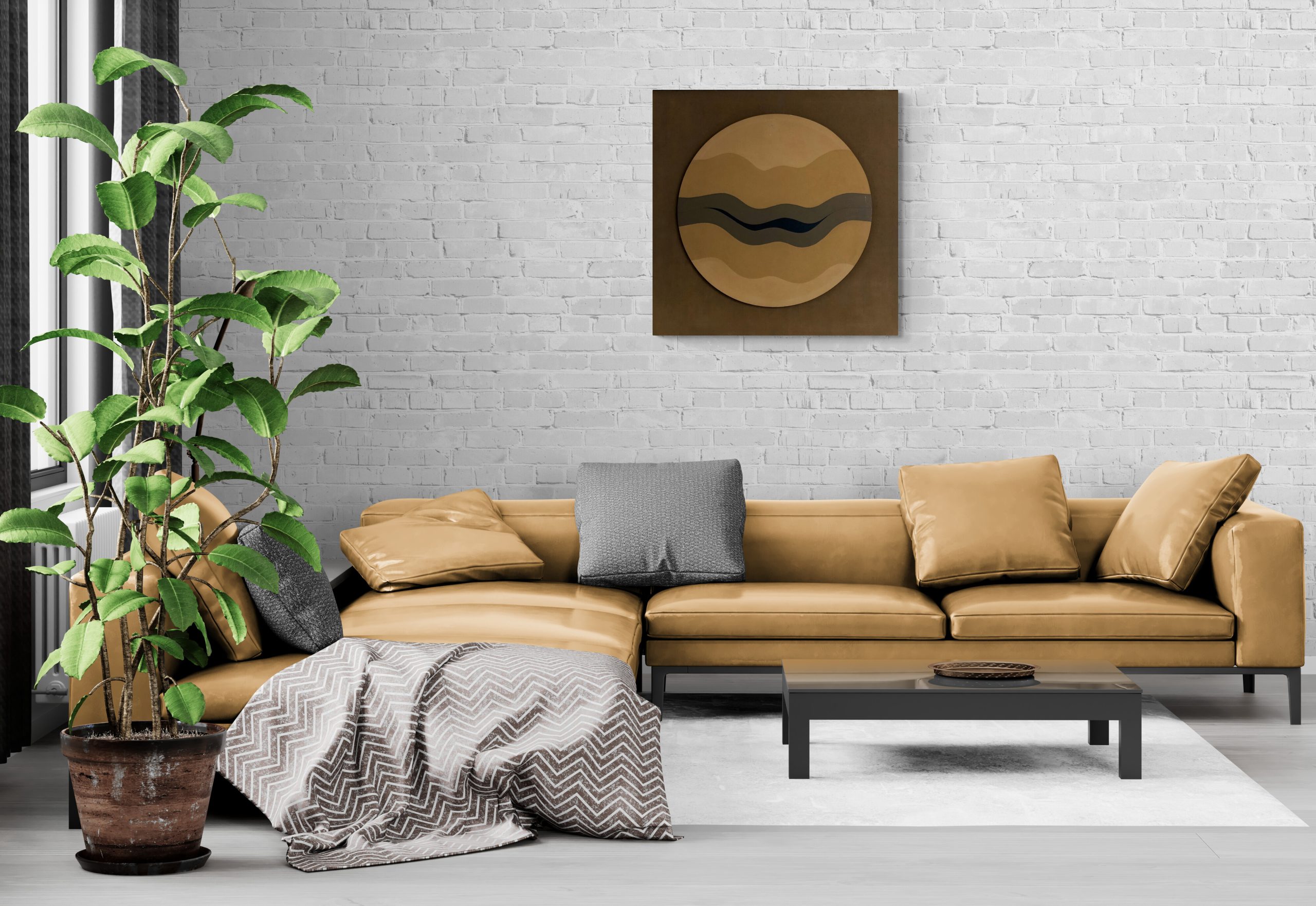
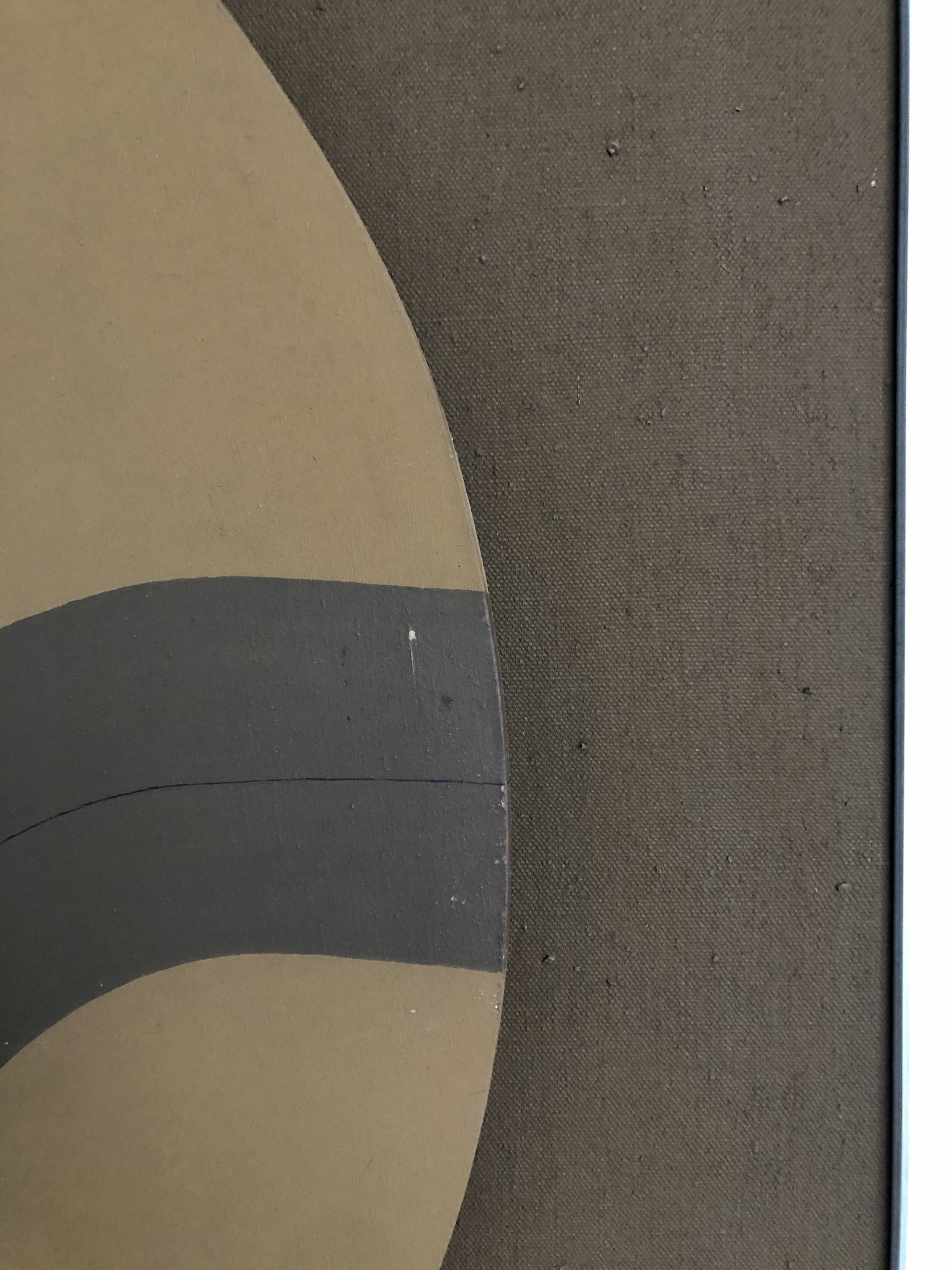
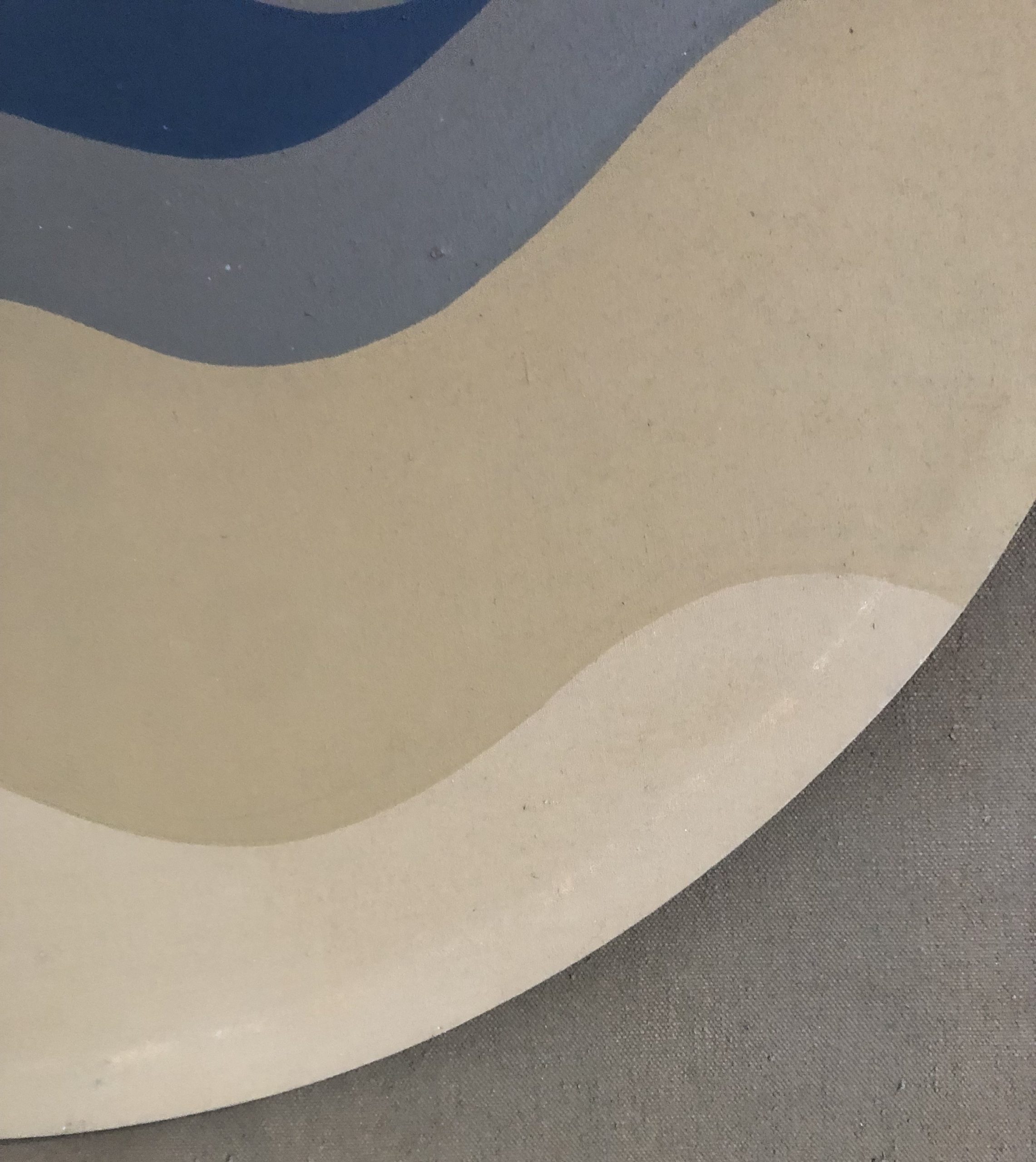
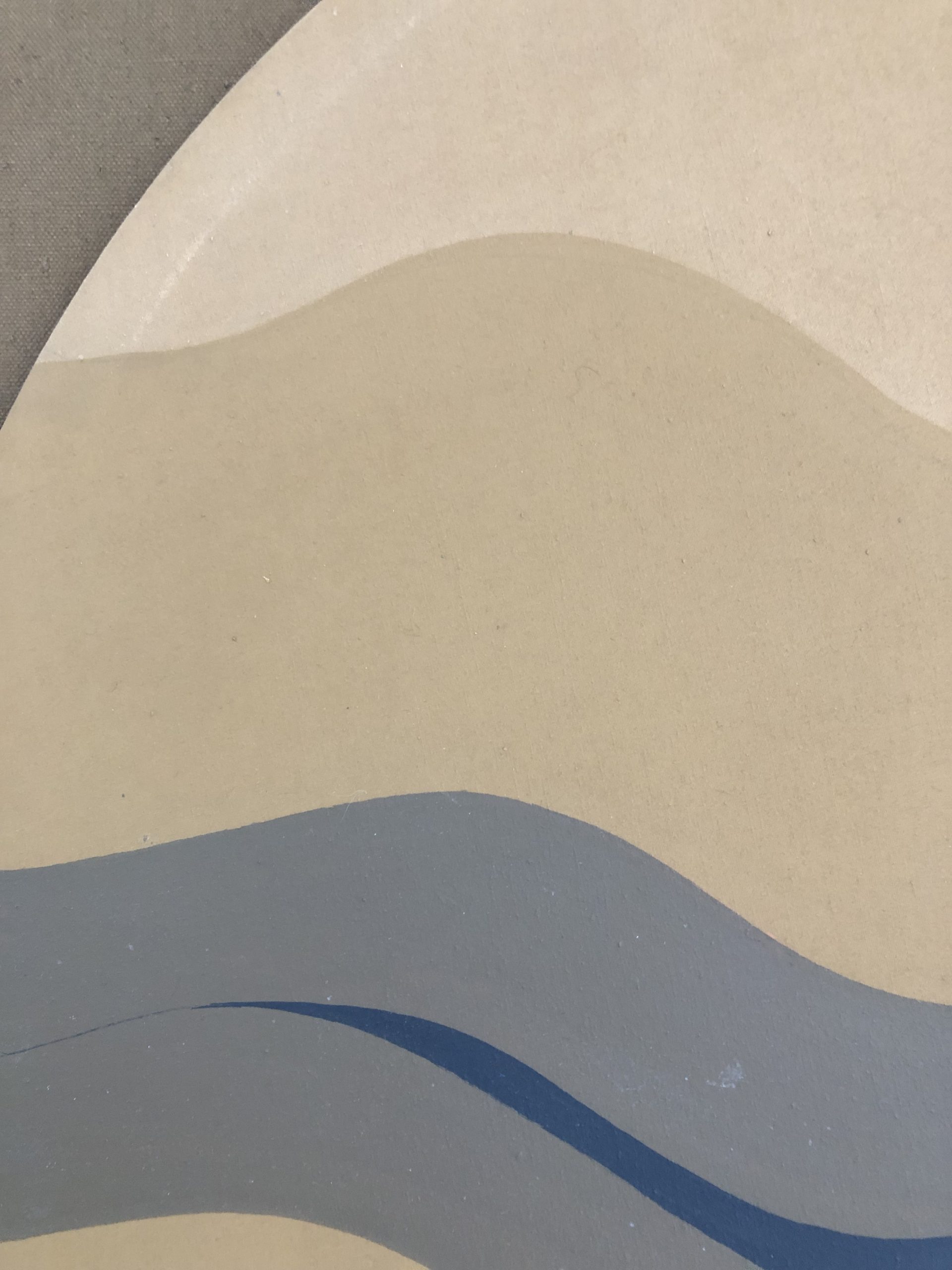
35.62 x 35.62 inches (90,5 x 90,5 cm)
Tags: #MidCenturyModern #HannesGrosse #ArtHistory #FineArts #GermanArtist #HardEdgePainting #ContemporaryArt #Sculpture #ArtisticJourney #ArtisticStyle #ArtisticTechnique #ArtisticLegacy
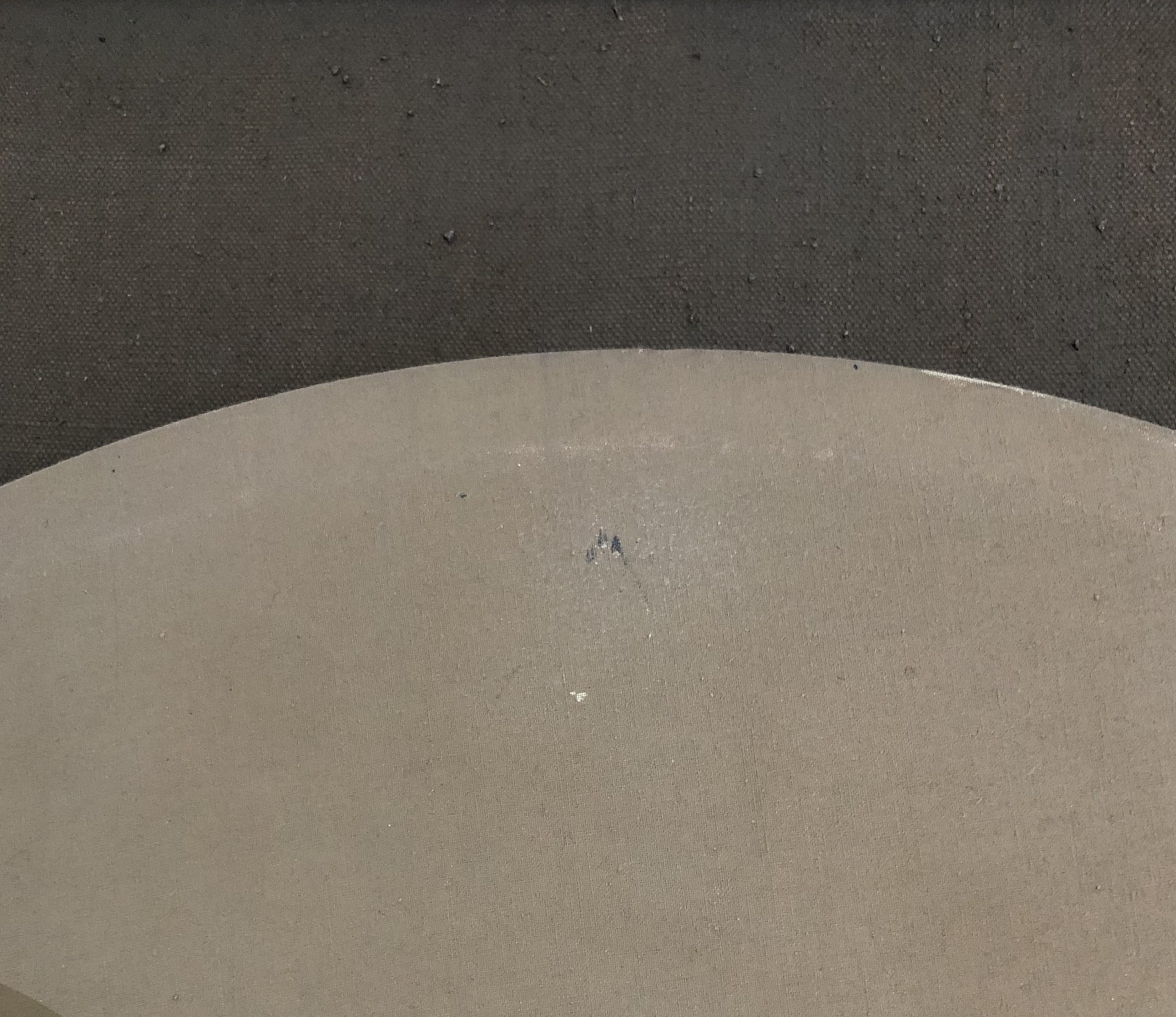
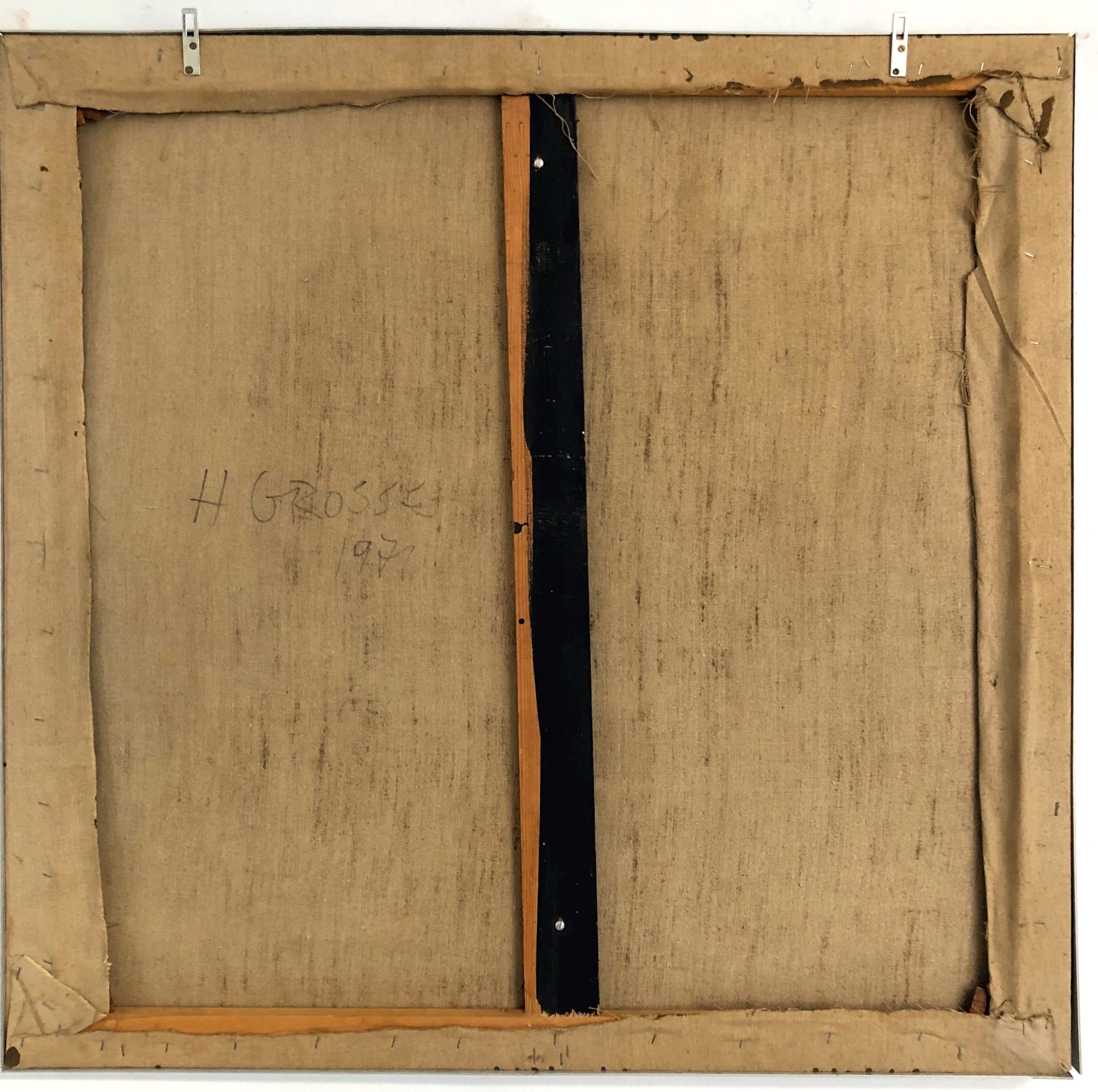
*Condition: minute paint abrasion consistent with age. Otherwise in good vintage condition. Please refer to listing images for details.
Hannes Grosse studied at the Academy of Fine Arts in Munich from 1955 to 1959.
He worked and lived in Paris, Mexico City, and New York, among others.
Today, he resides in Manson’s Landing in Canada, British Columbia.
Hannes Grosse is considered one of the well-known German artists of the 1960s and 1970s.
He is a representative of Hard-Edge painting, known for his wavelike works.
Additionally, he created three-dimensional wavelike objects/sculptures for landscapes and gardens.
“The means I use are color and form; color in progression, yet sharply separated, form reduced to a basic scheme, color and form moving towards each other, simultaneously forming a structure that unifies the image or object. Essential is the balance, combining the constructive with the organic, harmonizing color with form, making the composition a unity, maintaining movement yet anchoring it at a certain point.”
Hannes Grosse Born in 1932 in Berlin. Studied in Munich and Paris. First traveled to New York in 1964, followed by longer stays in 1966 and 1967. Received the Painting Prize of the Free State of Bavaria in 1969. Solo exhibitions since 1964 in Munich, Zurich, Schwenningen, Bad Godesberg, Frankfurt, and recently in the series ’14 x 14′ at the State Art Hall, Baden-Baden, and the Forum Galerie van de Loo, Munich, 1969. Participated in exhibitions of the German Artists’ Association and the 6th Biennale in San Marino, and ‘Alternative Attuali’, L’Aquila. Lives in Oberammergau. Bibliographical Note: Jürgen Claus Hannes Grosse, Leaflet of Galerie Nickel, Bad Godesberg, 1968. Each statement should be the conclusion of numerous experiences, each image a carrier of a complex reality. The artistic statement, whatever form it may take today, requires more than just a spontaneous impulse, a gesture; it also requires more than just construction, movement, or idea. The artistic product is the result of our relationships with realities, a combination of technical and mental data transforming into an optical phenomenon. For every artist, there are overarching concepts that determine the design and lead to a specific direction. As a result of these concepts, the image becomes a composition that still forms a unity. The image or object should contain the whole in detail—it is the fixation of a point within a movable, infinite structure.
| Year | 1971 |
|---|---|
| Dimensions | 35.62 x 35.62 inches (90,5 x 90,5 cm) |
| Signature | Signed |
| Framing | Framed |
| SKU | 924802-2102 |
Each artwork is professionally packed and shipped fully insured. Returns accepted within 14 days of delivery in original condition. Contact the gallery for white-glove or international shipping quotes.
Our gallery team is here to help with any questions about this artwork.
Contact Gallery